Monday, 13 February 2012

Möbius Stripped Bare: Some Thoughts on Loops and Repetition


Cecilia Bonilla’s video art installation In An Instant All Will Vanish is a looped film of a gymnast preparing to deliver her floor routine. The seamlessly replayed clip denies us the resolution of her actual performance, stretching a brief moment of anticipation into an eternity and inviting us into the private inner world of the lone athlete.

In An Instant All Will Vanish
2011, single chanel DVD, continuous loop, soundtrack
(Cecilia Bonilla with Matt Lewis, commissioned by Haringey Arts Council)

Exhibited as part of Fabricate, Inter Alia's current exhibition at The Parlour Gallery, this installation is intriguingly curated into the otherwise static company of photography and printed works. As an experiential piece, it is quite compelling and left me reflecting on the psychology of loops and repeated patterns. 

Upon viewing a moving image, our first instinct is to interpret narrative and continuity. In Bonilla’s piece, we feel the sense of rising tension as we wait for something to happen, but it never does. The moving image implies a passage of time and so a carefully looped video can almost create an alternate timeline for the viewer, alternately extracting and abstracting meaning like a repeated word word word word word word word word word word word word. 

Scooby and Shaggy run out of the
"repeat pan" and into the fire!
Yet despite the infinite promise of the endlessly recycled vignette, this hypnotic effect is temporary. As we begin to notice and preempt the repeated shrugs and small movements of Banilla’s subject, the spell is broken. We interpret the illusory passage of time only until the brain has enough information to recognise the loop as ultimately inanimate as a still image. Like the "repeat pan" trick of an old Hanna-Barbera cartoon, once we've seen a terrified Scooby and Shaggy fleeing past the same background door, window and potted plant for the fifth time, we realise they aren't actually going anywhere at all.  

Into the uncanny valley of the dolls with
the Nedo Repliee Q2 robot hostess
Once we recognise an image as constant and unchanging, we immediately lose the temporal dimension. It was common practice in cheaply produced television shows of the 60’s and 70’s to use still images in place of filmed action – often in cutaway scenes to establish location or draw attention to an object or plot macguffin. Even though these are typically scenes that would demonstrate no activity even if captured on film - such as a close of up an impending murder weapon for a Columbo antagonist or the gates of the Southfork ranch in Dallas – the use of such still images seems extremely jarring. The perfectly frozen nature of the still seems unnatural, wrong or somewhat unreal.  

Perhaps there is parallel to this effect of disengagement in the “uncanny valley” - a hypothesis in the field of robotics that suggests when human replicas look and act very close to, but not perfectly, like actual human beings, it causes a response of revulsion among human observers. Our brain seems hardwired to reject the unnatural symmetry and predictability of the manufactured facsimile and the illusion of life is lost. 

Never a dull moment 
with veteran superstar 
turntablist Grandmaster Flash
The repetitive beats of dance music are especially reliant on maintaining this organic - or analog - connection with the listener as long as possible. Some of the very first popular music to feature mostly loops and samples, such as that produced by Yellow Magic Orchestra or even the wildstyle turntablism of Grandmaster Flash, was carefully structured to feature steadily layered textures of looped sounds and a progression of rhythms that are never allowed to become predictable. 

A friend who produces breakbeat music once explained how he even incorporates mistakes and almost imperceptible changes of timing into his looped drumbeats. The effect is subliminal, but serves to make identical loops feel less mechanical and more organic to the listener. Compare this artful construction of sound with a late 80’s Mark Summer B-side and notice how quickly the listener disengages from the predictable.

Thus, in order to maintain audience connection as long as possible, the use of looped material needs to be so subtle as to avoid immediate and obvious recognition of repetition, yet still establish enough delicate variation in texture to sustain the illusion of the passing time. Yet, whilst the use of loops in music and narrative moving image is designed to be as invisible as possible, for artists the creative potential of the looped image is often exploited deliberately and directly.  

Rodney Graham's Vexation Island is a 9-minute film that presents an unconscious eighteenth century shipwrecked man with a wound on his head. The man wakes, rises, notices a coconut in a nearby palm tree and shakes it to get it down. The coconut falls out of the tree and hits him on the head where his wound already was. He is promptly knocked unconscious and falls down in the same place from which he had started. The film then seamlessly starts all over again, raising questions whether or not the short film has a beginning or an end.

Similarly, although less specifically concerned with temporality, Cecilia Bonilla’s video art installation In An Instant All Will Vanish is a looped film of a gymnast preparing to deliver her floor routine. The seamlessly replayed clip denies us the resolution of her actual performance, stretching a brief moment of anticipation into an eternity and inviting us into the private inner world of the lone athlete.

In An Instant All Will Vanish
2011, single chanel DVD, continuous loop, soundtrack
(Cecilia Bonilla with Matt Lewis, commissioned by Haringey Arts Council)

Exhibited as part of Fabricate, Inter Alia's current exhibition at The Parlour Gallery, this installation is intriguingly curated into the otherwise static company of photography and printed works. As an experiential piece, it is quite compelling and left me reflecting on the psychology of loops and repeated patterns. 

Upon viewing a moving image, our first instinct is to interpret narrative and continuity. In Bonilla’s piece, we feel the sense of rising tension as we wait for something to happen, but it never does. The moving image implies a passage of time and so a carefully looped video can almost create an alternate timeline for the viewer, alternately extracting and abstracting meaning like a repeated word word word word word word word word word word word word. 

Scooby and Shaggy run out of the
"repeat pan" and into the fire!
Yet despite the infinite promise of the endlessly recycled vignette, this hypnotic effect is temporary. As we begin to notice and preempt the repeated shrugs and small movements of Banilla’s subject, the spell is broken. We interpret the illusory passage of time only until the brain has enough information to recognise the loop as ultimately inanimate as a still image. Like the "repeat pan" trick of an old Hanna-Barbera cartoon, once we've seen a terrified Scooby and Shaggy fleeing past the same background door, window and potted plant for the fifth time, we realise they aren't actually going anywhere at all.  

Into the uncanny valley of the dolls with
the Nedo Repliee Q2 robot hostess
Once we recognise an image as constant and unchanging, we immediately lose the temporal dimension. It was common practice in cheaply produced television shows of the 60’s and 70’s to use still images in place of filmed action – often in cutaway scenes to establish location or draw attention to an object or plot macguffin. Even though these are typically scenes that would demonstrate no activity even if captured on film - such as a close of up an impending murder weapon for a Columbo antagonist or the gates of the Southfork ranch in Dallas – the use of such still images seems extremely jarring. The perfectly frozen nature of the still seems unnatural, wrong or somewhat unreal.  

Perhaps there is parallel to this effect of disengagement in the “uncanny valley” - a hypothesis in the field of robotics that suggests when human replicas look and act very close to, but not perfectly, like actual human beings, it causes a response of revulsion among human observers. Our brain seems hardwired to reject the unnatural symmetry and predictability of the manufactured facsimile and the illusion of life is lost. 

 Never a dull moment 
with veteran superstar 
turntablist Grandmaster Flash
The repetitive beats of dance music are especially reliant on maintaining this organic - or analog - connection with the listener as long as possible. Some of the very first popular music to feature mostly loops and samples, such as that produced by Yellow Magic Orchestra or even the wildstyle turntablism of Grandmaster Flash, was carefully structured to feature steadily layered textures of looped sounds and a progression of rhythms that are never allowed to become predictable. 

A friend who produces breakbeat music once explained how he even incorporates mistakes and almost imperceptible changes of timing into his looped drumbeats. The effect is subliminal, but serves to make identical loops feel less mechanical and more organic to the listener. Compare this artful construction of sound with a late 80’s Mark Summer B-side and notice how quickly the listener disengages from the predictable.

Thus, in order to maintain audience connection as long as possible, the use of looped material needs to be so subtle as to avoid immediate and obvious recognition of repetition, yet still establish enough delicate variation in texture to sustain the illusion of the passing time. Yet, whilst the use of loops in music and narrative moving image is designed to be as invisible as possible, for artists the creative potential of the looped image is often exploited deliberately and directly.  

Rodney Graham's Vexation Island is a 9-minute film that presents an unconscious eighteenth century shipwrecked man with a wound on his head. The man wakes, rises, notices a coconut in a nearby palm tree and shakes it to get it down. The coconut falls out of the tree and hits him on the head where his wound already was. He is promptly knocked unconscious and falls down in the same place from which he had started. The film then seamlessly starts all over again, raising questions whether or not the short film has a beginning or an end.

Tuesday, 7 February 2012

Make Your Own Damn Culture: How Social Media Might Just Save The Art World


As we enter a new age of austerity, the cultural landscape is shifting beneath us and fault lines have finally begun to shake the precariously decadent pillars of our creative monotheism.  Please forgive this self-indulgent opening paragraph but it seems an appropriate way to begin a sobering reflection on the twilight of an era of obscene greed, vanity and cultural self-indulgence.

This is a crucial time in our cultural history and it has been instigated by two major developments.  The global economic recession is one powerful influence, but it is the maturity of online networks and social media that looks set to have the greatest and most defining impact.  The consequences of a new global digital culture may be felt in almost every aspect of our modern lives and there is every reason to believe that the effect on the arts might just be revolutionary.

During comfortable economic times, it’s pretty plain to see we have allowed practically all our popular forms of art become increasingly devoid of purpose and exclusive to participate in.  The last 30 years, in particular, have seen the popular arts to become the very embodiment of aspirational affluence and excess.  It would be even be easy to forget it wasn’t always this way.

To understand the particular vulnerabilities of the arts to this most recent technological shift, we have to first glance back at how our notions of the purpose and form of the ‘popular arts’ evolved.

The Classical Arts had always been reliant on the patronage of the rich and powerful.  The 15th Century banking dynasty of the de Medici family, for instance, financed much of the art and architecture that came to define the Renaissance period.  Countless revered artists, including Donatello, Fra Angelico and Michelangelo, emerged from these deep mercantile pockets, but the alchemical teat of classical patronage – which extended to suckle poets, painters and composers alike – did not conjure these art forms into being.  The crafts, mediums and concepts of images, words and music have existed since our most primitive times.  Whilst influential, these classical achievements do not fully represent the truly popular expression of the art forms of their time: these are simply the loudest and most grandiose of our cultural artefacts, intended to celebrate the power of church, state and commerce.

Far from being exclusive and refined, the arts are mined from much deeper and universal veins of existing creativity and human experience.  ‘Popular Culture’ in many ways could be read as a shorthand (or a rebrand) for a universally accessible cultural experience – and for over five centuries our primary popular art forms have thrived independently of patronage, thank you very much.  Robert Johnson, Charlie Parker, Vincent Van Gogh, Jan Vermeer, William Blake and Oscar Wilde, amongst countless other visionaries, died penniless and ruined, yet all played a key role in establishing the billion dollar pop culture industries that thrive to this day.

Artists who died penniless: Charlie Parker, Oscar Wilde, Vincent Van Gogh,  
Jan Vermeer, William Blake and Robert Johnson.
Music is often recognised as the most popular of the popular art forms.  Perhaps because of its universality and ability to transcend barriers of language.  Perhaps it is simply the most accessible art form to participate in.  Either way, where popular music leads, contemporary pop culture seems to follow.  It is therefore at the birth of the modern recording industry in the pioneering early modernity of the United States, we can first see the strange shift in the commercialisation of culture that would soon engulf the wider arts.

Here again we find that advances in technology were the catalyst.  In this case it was Edison’s phonograph, a recordable medium that enabled affordable reproduction of music to wider audiences.  Coupled with developments in radio broadcasting, a vast palette of sounds - from delta blues to jazz to rousing rural hymnals to Appalachian folk - could be easily be stripped from their natural habitat and repackaged for mass consumption.

At a local level, it is a common culture – in fashion, in ritual and art - that provides a shared identity and holds a community together.  Common culture was the framework for our first social networks.  But up to this point, they had been limited in relevance to their locality.  The result of giving any of these isolated elements national or international exposure was presumably a gamble, but here, at a time when a horde of middle-class post-war teenagers were searching for their own mass identity, the results were explosive.

If the fledgling 50’s music industry was taken by surprise by the sudden and seemingly unforeseen popularity of Bill Haley’s Rock Around The Clock, it didn’t take them long to recognise the incredible financial potential of the mass teenage thirst for backbeat rebellion. By the time Elvis was face down in the Graceland bathroom, Rock and Roll had gone global and the first multi-million dollar cultural industry had been born.  By 2005, just four music groups controlled about 70% of the worldwide music market. Many of our beloved Independents are simply undercover tentacles of this beastly Lovecraftian “Big Four”, an unholy alliance of Sony Music Entertainment, the EMI Group, Warner Music Group and The Universal Music Group.

Culture Goes Pop!
It was at during this time that ‘pop culture’ as we know it first emerged – and the musician was the first artist to find the purpose of their craft readjusted.  It was to make money.  Whether a spokeperson, a healer, a historian or hedonist, it appeared the craft had become entirely reliant on the mechanisms of commerce, not only to be recorded and heard, but also to be formally anointed as a professional ‘artist’.  Without the backing of publicists and promoters or a label with the financial clout to press recordings and enforce repeated radio play, then the art alone became literally and figuratively stripped of value.

That value lay in the ability to assimilate, replicate and disseminate that art and, over subsequent generations, painter and poet alike were required to submit to the dark arts of marketing.

Marketing demands that the quality of art is defined by its fiscal return, it’s value therefore determined by mass popularity.  This model quickly extended to place all the popular arts in the most overwhelming position that all experimentation and evolution is cruelly stifled.  The creative became a wholly commercial concern.

Some Art, yesterday...or is it just soup?
Art was no longer something you could do, it was reformed, reshaped in the corporate image.  Ever avaricious, the forces of industry recognised the power of art as an incredible winning investment.  Why gamble on unstable dreamers, when the product could be manufactured just like any other soup can? With the ability to reward those profitable successes with promises of sex, money and fame, it was easy to line up the next willing stooge to help perpetuate the myth that culture was little more than an elaborate exercise in product placement.

And so increasingly elaborate machinery was installed in order for artists to access the recognition and riches they craved.   You could no longer just be a simple painter outside of the system and still be considered a legitimate artist.  You instead had to navigate the ever more narrowing channels of university tutelage and sales pitch, auction house and seminars, private view and dinner party.  Conditioning and expense was installed to ensure increasing exclusivity.  After all, in order to maximise audience and profit it is also necessary to control and limit the means of production.

It's Andy Warhol!
Ever the brazen brattish cousin of the popular arts, the fine art world occasionally attempted to cast its critical gaze on the very cultural industries that dominated the galleries, the studios, the critics and the investors who supported them.

The 1960’s Pop Art of Andy Warhol recognised and addressed this alliance directly.  His paintings defiantly used imagery from advertisements, newspaper headlines and other mass-produced images from American popular culture, famously including everything from Campbell's soup tins to Coca Cola bottles.  Later he applied the same treatment to portraits of celebrities and other prominent public figures, including Elvis Presley, Jackie Kennedy and Marilyn Monroe.  

His narrative reconciled high and low culture and his assertion that ‘everyone could have their fifteen minutes of fame’ suggested an intention to undermine the distinction between the two.  This attempt to reappropriate the language of the commerce was initially successful, yet as Warhol attempted to prise open the doors of the art factory to all he only served to elevate the role of the artist to even higher and unassailable heights of fame.  In his attempt to embrace mass audience participation, Warhol’s screen prints, screen tests or even his motley crew of acolytes were no longer the art object, instead the art became the artist his or herself.  He got reappropriated right back and inadvertently created the role of Superstar Artist.

Explosive spectacle and money, as juxtaposed by
photographers Geoffrey H. Short and Nikolai Ishchuk
from Big Bangs, Big Bucks, the excellent & thought 
provoking 2011 exhibition from Diemar/Noble Photography
The Superstar phenomenon is a tribute to the effectiveness of the scorched earth cultural policy of building impenetrably high financial barriers.  An neat comparison can be seen in the movie industry, where the brief wellspring of new wave, independent and experimental cinema and the radicals of the 70’s New Hollywood who rushed to claim the medium from the aging studio systems, were quickly absorbed and neutered by the megabucks blockbuster.  These were movies so big and expensive that they simply couldn’t fail, with budgets so enormous that they would bankrupt a small country.  Despite the howls of outraged critics, excess was successful every time, because we are all drawn to spectacle, no matter how artless.  There is, of course, a place for awe and spectacle in our lives, but once spectacle comes to define a medium and dominate every platform, the little guy with the big idea can’t even contemplate competition.  Art becomes an abstract of itself: a gigantic, soft rock, slow motion, exploding, computer generated, Jerry Bruckheimer parody of itself – and we love it.

For cinema and Warhol alike, this reached its peak in the materialist eyesore of the 1980’s.  Here you will find celebrity artists, such as Jeff Koons, who were barely even involved in the production of their own work at all.  Koon’s reproductions of banal objects - such as balloon animals rendered in stainless steel with mirror finish surfaces - were exquisitely expensive productions, created by master craftspeople and designed to be spectacle.  The role of the Superstar artist was to be a director, a brand and to be an utterly glamorous and rich object of aspiration.

This is what a £14 million cystal skull looks like.
For The Love of God, Damien!

It’s no surprise that the fine arts have became so increasingly self-absorbed and self-referential under the academic conditioning of Postmodernism; drifting so far from relevance to the wider world that the media was in danger of becoming as impenetrable as the arcane confidence trick of the ancient alchemist or the modern day gas engineer.

This Postmodern tide reached it’s most mercantile extreme in 2007, with Damien Hirst’s For The Love of God: a £14 million platinum cast of a human skull, encrusted with 8,601 flawless diamonds.  In an article defending Hirst in The Guardian, Germaine Greer clearly establishes the role of Hirsts art:
"Hirst is quite frank about what he doesn't do. He doesn't paint his triumphantly vacuous spot paintings - the best spot paintings by Damien Hirst are those painted by Rachel Howard. His undeniable genius consists in getting people to buy them. Damien Hirst is a brand, because the art form of the 21st century is marketing. To develop so strong a brand on so conspicuously threadbare a rationale is hugely creative - revolutionary even. The whole stupendous gallimaufrey is a Vanitas, a reminder of futility and entropy.”

The outsider with wild and unique vision, but even a modest budget for materials, could never hope to compete for audiences on the level of this kind of spectacle. The artist without patronage or the support of a major sponsor or gallerist, the band without the backing of a major label or the writer without the clout of an international publishing house was almost invisible. If a tree fell in the woods and no one was around to hear it, only John Cage would be allowed to record the resulting zen koan. Anyone else would just be plainly nuts.

It was the industry that defined the relevance of art, a curious state of affairs considering the long-standing role of the underground and the outsider in defining cultural identity. Warhol’s assertion that we would all have our “15 minutes of fame” was remarkably prescient: by the 1980’s we all wanted our 15 minutes, our MTV and our bowl of M&M’s with absolutely all the brown ones removed.

Pop Goes Culture!
This bubble is now dangerously and joyously close to bursting.  Art is only relevant and engaging when it reflects our life.  First and foremost, this is simply because the money isn’t there anymore to sustain the Superstar lifestyle.  Nowhere is the effect of the economic collapse on the art world illustrated more clearly than in the recent cancellation of a planned exhibition by conceptual artist Chris Burden at the Gagosian Gallery in Los Angeles.  Burden’s installation involved the use of 100kg of gold bricks that the gallery purchased from the Stanford Financial Group, unfortunately now at the centre of a massive fraud investigation. Now, announces the Gagosian, "the gallery's gold has been frozen while the U.S. Securities and Exchange Commission investigates Stanford." 

But even if we aren’t all going to become Superstars anymore, if this great cultural gold rush seems to be over, people are still making art.  In fact, they are making lots of it, despite the absence of red carpets, canapés and gushing praise.  In an article discussing the post digitalisation future of the publishing industry, writer Neil Gaiman again reflects on the music industry as an analog to this cultural transition: “There are fewer rock stars travelling the world in their private jets, but there's a lot more good music.”

Actually there have always been artists making powerful, engaging and thought provoking work outside of the professional workshop, but it’s almost as if we never noticed before.  The reason we notice it now, as I stated all those words ago, is because of austerity and technology.

Austerity suddenly makes the gratuitous spectacle a little less attractive and urges us to rub our eyes and look away for a moment.  During this serendipitous interruption, it’s a shock to find just how close technology has brought us together.  Suddenly we are part of an unimaginably vast common audience and – with the spectacle temporarily muted – we can actually hear each other. In online social media, technology has finally given all of us the ability to communicate, to meet, debate, connect and share freely in a way that had previously been restricted to the monied corporate gatekeepers of the arts.

It’s ironic that the arts have been freed from their imprisonment by the progress of technology that had initially been complicit in their incarceration.  During the late 60’s and early 70’s, mass reproduction of media had become affordable to the individual and this inspired a brief but enduring period of Do It Yourself culture.  Brash and aggressive punk music thrived on antisocial outsider status, defined by the rejection of mainstream popular culture and spreading to a substantial and politicised audience through a network of home taping and photocopied fanzines.  This defiance was short lived – without the oxygen of truly global marketing and denied a truly global platform, punk culture was quickly assimilated and one by one it’s surviving exponents lined up to sell out to major labels and world tours.  But now, technology has given us not only the tools of production and reproduction, but also, crucially, a networking, marketing and collaborative platform on a scale undreamed of just a few decades ago.

Lloyd Kaufman, from whose book,
Make Your Own Damn Movie,
I stole the title of this essay.

This levelling of the playing field is embodied in the concept of Network Neutrality, a principle that advocates no restrictions by Internet service providers or governments on audiences access to networks that participate in the Internet.

Lloyd Kaufman, the President of Troma Films, is a forceful champion of the Independent Arts.  While Kaufman’s own particular arts may be an acquired taste - the equivalent of loading a cannon with high concept Corman high scripts, steroids and boob jobs and firing it point blank at a day-glo wall to see what sticks – he is a passionate and eloquent advocate of Net Neutrality.  At Save the Internet, a campaign site for Net Netrality, Kaufman summarises:
“Right now, dear reader, your website, my company, Troma’s website and Disney’s website all have equal opportunities on the level playing field of the Internet. If your site or content is interesting, you can attract a larger public than Viacom, Rupert Murdoch or Justin Bieber. And, should the Internet ever prove to be a source of great revenue, then you too will have your fair share of the profit.”
Now, this is not a post-punk call to arms.  Art doesn’t need to be a prettily painted Molotov cocktail designed to smash the system.  Rather, we now face a readjustment of purpose.  There will always be a necessary place for prospective investment and spectacle in the art world – but now we have a chance to participate alongside and reclaim a new sense of cultural identity again.  Nowhere are the early glimmers of this cultural readjustment more evident than in the egalitarian organisation of social media based creatives. 

Global is the new local.  An artist’s commune or collective can now reach out to an international audience.  For the first time, every suburban dreamer or isolated rural recluse has a chance to resurrect the collaborative spirit of Warhol’s Factory or the Swinging London Pheasantry from the comfort of their own laptop.

Quirky independent collaborations such as Theresa Bruno and Krystle Shard’s Wallet Gallery, a neat social network based project to curate a show of miniature collected artworks within the confines of a leather wallet, act as catalysts to form an artist community around shared ideas, unrestricted by geography or access to particular networks or circles.

Learning to Love You More, Assignment #49
"Draw a picture of your friend's friend"
Noelien's Friend by Nina Yuen
Online platforms also enable a scope of interactivity and longevity that would have been economically unacceptable within the traditional confines of the commercial gallery.  Learning to Love You More was a website project by Miranda July and Harrell Fletcher. Over seven years, from 2002 to 2009, the artists posted assignments for their global audience.  Those participants who accepted these assignments - such as “repair something” or “interview someone who has experienced war” — submitted photos, articles, videos and audio clips of their completed tasks.

This collection of projects inspired a book and was presented at venues including The Whitney Museum, The Seattle Art Museum and the Wattis Institute. In 2009, the website was acquired by the San Francisco Museum of Modern Art. Here, in an increasingly common inversion, it is the audience that first engage, promote and establish the provenance of the artwork, with the traditional platforms of the art industry following afterward, reduced to the status of passive observers and collectors.

Alongside crowd sourcing and audience participation, the online network can also generate cash investment in diverse proposals.  Online pledge systems for funding creative projects, such as Kickstarter, have great potential for realising more ambitious ideas.  Broad shared backing of amounts as small as $5-$10 means that investors are often engaging in patronage based on ownership of something they would like to be created rather than direct financial return.

Still from the Kickstarter promotional short for 
Emily Berçir Zimmerman's So To Speak
Consider So To Speak, an exhibition conceived and curated by Emily Berçir Zimmerman.  Her proposal was selected to be exhibited at the BRIC Rotunda Gallery in New York, but the costs entailed in shipping the four key artworks by Fiona Banner, Hollis Frampton, Melinda McDaniel and Klub Zwei to Brooklyn exceeded the exhibition's allotted budget. Through Kickstarter, Zimmerman was able to raise the additional $2,500 necessary to programme the exhibition without compromise.

As was once the case long ago, the success or profile of a creative work no longer relies on the marketing budget; instead its success depends on its ability to inspire, engage or connect with an audience. Even financial barriers can be overcome: fan funding is self-fulfilling marketing – if your big idea is strong enough, interesting enough and attracts a enough investors to fund it into being, then you’ve the reassurance that the audience is there before you’ve put pen to paper, scene to lens or chord to record.

Antony Lane, icon of fan empowerment
Just a decade ago, the average movie fan could only daydream that they would one day be able to make their own feature and open a relationship with the medium they love from afar.  But now, if you’ve the passion to bring together enough likeminded people who share your vision, it’s a possibility that’s within the reach of all.  Just ask Antony Lane, whose entirely fan funded, old school zombie movie Invasion of the Not Quite Dead goes into production this year. 

Direct backing even enables established artists to reconnect with their audience.  Once freed from their contract with EMI, Radiohead's subsequent album In Rainbows was released through the band's own website in October 2007 as a digital download for which customers could make whatever payment that they deemed appropriate - even opting not to pay at all.  With no major label backing or marketing, 1.2 million downloads were reportedly sold by the day of release.

Appearing on The Colbert Report, Ed O'Brien explained: "We sell less records, but we make more money." Colin Greenwood explained the Internet release as a way of avoiding the "regulated playlists" and "straightened formats" of radio and TV, ensuring fans around the world could all experience the music at the same time and preventing leaks in advance of a physical release.

Make Your Own Damn Culture
Art makes us feel part of the world, part of something bigger.  At its best, it evokes shared experience.  We want to be part of something, to collaborate, engage and be complicit, not simply gazing acquisitively through shop windows.  We want art to mean something because we want ourselves to mean something.  We now have the tools to share our dreams, visions and crazy leaps of inspiration wider and more eloquently than ever before.  We have an ability to connect, engage and maybe even change our world in a way that no previous generation has experienced.  We really don't have any excuses anymore.  If we don't feel that our communities and cultures relate to us, speak with us or fulfill us, then we have the power - and the responsibility - to make our own cultural alternatives.  After all, if we can’t own our own culture and if we can’t participate in it, it’s not really our culture at all.


Saturday, 14 January 2012

Notes from the Underground: The Unnoticed Board & the High Visibility Vest


At Oval Station there is a noticeboard upon which some mysterious London Underground staffer dutifully writes a quote of the day. I have made many trips through this station over the last couple of years, but have failed to notice this incongruous board until recently. Over the course of recent visits, the words of F. Scott Fitzgerald, Aristotle and even Dr. Seuss have replaced regular station closure updates, last departure times or stern warnings concerning the unsafe surfaces of recently mopped platforms.


Apparently, this has gone on for some time. Since making this discovery I have also spotted similar messages at Stockwell and Angel, along with numerous peculiar personalised additions to railway station PA announcements, additions that I must have simply overlooked in the past. On a recent trip to York, whose grand 19th century station is a source of some regional pride, it took me almost an hour into waiting for a delayed connection to notice that the monotone concourse announcements were being recited entirely in verse:

“The 14:25 to Darlington is sadly delayed, apologies to travellers whose journeys waylaid.”  

Dr. Seuss is evidently a big influence on our frontline railway employees.

Like the largely unnoticed-noticeboard, the majority of passengers around me seemed entirely oblivious to the poetic oddity. They were unlistening until the exact moment that their destination was mentioned and only then would they pay enough momentary attention to get the information they needed.

The more scrutiny I give to the utilitarian environments of the city, the more apparent these little acts of everyday subversion appear. It’s fascinating how acutely this highlights our obliviousness to the monotony of the familiar and regular.

My compadre Tom modelling the classic 
High Visibility Vest at the Secret Garden Party.
Note that no one else can see him.

A similar oxymoron to the Notice Board is also found in the High Visibility Vest - a brightly coloured safety garment that grants the wearer with an incredible power of invisibility. At various music festivals and events, where I am required to move through herds of revellers, from stage to stage and usually at woefully short notice, I quickly recognised the value of the fluorescent tabard. Like a blue collar Moses, even the most belligerent crowds instinctively spread to allow safe and swift passage. The High-Vis wearer is also regularly waved through into the inner sanctum of backstage or other forbidden areas, with barely a glace at official security wristbands or passes. If someone is packing High-Vis they are projecting one simple statement, loud and clear: “I am working.”

The only proof that I am not entirely invisible is in the occasional hurried retreat of anyone I might pass who is under the misconception that this perceived display of authority is a threat to whatever illicit activities they might be indulging in. Prohibited glass bottles are tucked into jackets, bongs are hastily abandoned and awkward outdoor sexual manoeuvres are temporarily chastened.

No one pays the slightest attention to what the High-Vis wearer is doing - it is simply assumed they are meant to be there.

This special power is well known. Street artists have long used the Hi-Vis to openly write on walls, safe in the knowledge that passers by simply will not give them a second look. The famed Banksy often goes further, erecting a worker’s tent or stencilling official looking ‘graffiti permissions’ on walls. It is notable that the Securitas depot heist, the largest cash robbery in British history, was carried out by a crack team primarily using the deceptive masterstroke of Hi-Vis vests.

It is the perfect urban camouflage: the wearer becomes the unnoticed board. In time I would be unsurprised if feral urban foxes gradually evolved markings in the form of tiny yellow jackets in order to truly slip unseen through the city.

After a while, we stop looking at the things we see every day. We stop engaging with familiarity. Whilst working in a well-known high street warehouse superstore during the late ’90’s, we would amuse ourselves with endlessly nonsensical announcements on the in-store PA system. Despite increasing levels of puerility, no one paid the slightest attention. Just for the record, “Mrs Kuntz” was a real customer – and I would like to apologise to her now for any entirely accidental innuendo that may have crept into my requests that she come to the main counter.

'Rowdy' Roddy Piper (above) wakes up to
truth in advertising (below) in 'They Live'
In the movie They Live, John Carpenter’s 1988 science-fiction actioner, one time wrestling superstar ‘Rowdy’ Roddy Piper discovers a pair of special sunglasses allow him to wake up to the fact that aliens have taken over the Earth. These aliens occupy the highest level of the social elite and have been controlling humanity for decades.

Through his magical eyewear, Piper can not only see the true skeletal form of the disguised aliens but also the subliminal messages hidden within mass media and signage, used to ensure the human race OBEY, SUBMIT and STAY ASLEEP.

In contrast, the increasingly homogenous environment of our surroundings, our mass media, our clone high streets and sterilised, commercialised culture, ensures that we gradually start to become oblivious to the individual and the incongruous.

Unlike the secret invasion of They Live, bland uniformity is the illusion and the revealing effect of any unexpected crack in this uniformity of our surroundings might instead be a revelation and reminder to WAKE UP.

Saturday, 31 December 2011

Happy New Year: My Obligatory List of the Pick of the Stuff of the Year, 2011


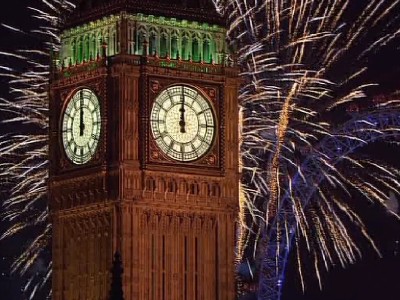
Insert Generic New Year Screengrab here
As the critically ailing ship of 2011 slowly sinks beneath the waves, it’s time to burn the deckchairs head for the lifeboats. 

It’s time for my usual New Years Eve ritual of affecting cool and detached party ambivalence until the last possible moment. However, at the last minute, my resolve to stay home will collapse with a barrage of last minute texts as I try to in vain to search for that mythical perfect wild and decadent party. 

You know the one - that soon-to-be historic event that everyone you know must have been invited, except for you?

Predictably, I’ll find myself yet again pleasantly drunk and toasted on a couch somewhere with a small gathering of friends, thinking proudly to myself that this was the best plan all along and wondering why I even bothered to entertain the idea of the overpriced punishment of clubs or re-enacting Braveheart in the desperate crush of Trafalgar Square.

Until next year, at least.

Either way, we want to be close to our loved ones during the Midwinter holidays and the celebration of the passing of the old year is something hardwired into us regardless of culture. Inevitably, that celebration turns to reflection on the year passed and the year ahead. It’s a curious time, when nostalgia is at it’s most myopic as we squint to make sense as to whether we’ve made sense of the last 12 months.

A family down the road are originally from Brazil and are planning to celebrate New Year with the ‘Quema del Año Viejo’ – literally the Burning of the Old Year. They have been building Papier-mâché effigies of bad things that have happened in the departing year to be burned on News Years Eve night. If you had a recent car accident, for instance, you may choose to make an effigy of the offending vehicle to purge that memory. The youngest son of this particular family has been building a dinosaur, which makes me think my own problems must have been pretty modest in comparison.

In a way, a broader manifestation of our desire to congregate and burn away of the Old Year is in the annual lists, reviews and ‘Best of’ commentaries that dominate the digital, print and whatever other airwaves there are left. In this reflective spirit I thought I would share my own ‘List of Stuff of the Year, 2011’. I don’t consider myself to be a particular expert in any specific branch of ‘stuff’, so instead I’ll cover all the traditional bases of music and movies and hide my limited view under the pretence of a ‘pick of the year’.

2011 has been a year of unrest and austerity, defined by a mood of impending great changes and uncertainty. At times like this the comforts of nostalgia are even more compelling. Whether it’s coincidence – or clunky editorial convenience – almost all of my scattered highlights of the last year reflect this.

Refn's Drive, Blizten Trapper's American
Goldwing and Amanda Fucking Palmer all
delivered style and substance in 2011


My two favourite movies of the year - in my limited opinion the best of the year by some distance - were Nicolas Winding Refn’s Drive and Darren Aronofsky’s Black Swan. Both look back reassuringly to a different cinematic age, yet are also fresh and wholly contemporary.

Drive channels the same bleak 80’s neon dreams that I’m sure still trouble Michael Mann on a regular basis. Ryan Gosling’s Driver-with-no-name is an everyman nephew of Clint Eastwood and Travis Bickle. A vision of icy retro cool, punctuated with blasts of intense and brutal violence, Refn delivers pure cinema and a timely reminder of the importance to show and not tell.

Black Swan, conversely, reanimates the 70’s Giallo with a wild melodrama just barely contained by beautiful psychedelic visuals. Amidst the mayhem, Natalie Portman takes the role seriously enough to keep the viewer emotionally engaged and the climax packs a harder punch than any ballet-based drama has a right to.

An honourable mention should also go to Duncan Jones' Source Code, which was a fresh, economical and exciting spin on some classic pulp science fiction. I also enjoyed Jason Eisener’s wild exploitation movie Hobo With a Shotgun. Although an entirely more sleazy feature – and therefore heaps more fun – it manages a similar trick to those above. It is a grindhouse tribute, borne from a fake trailer for Tarantino & Rodriguez’s Grindhouse movie, but never descends into self-conscious parody or pastiche. Instead, it feels like the real deal, which is because it actually is. Even the Raccoons cartoon end theme blasted over the credits feels like it was always destined to close a splatter movie about a vengeful vagrant. It’s bloody, antisocial, subversive and – most bizarrely of all – occasionally quite charming.

Similarly, I’ve found myself travelling back to more comfortable and secure times through most of the year in music. I’ve been rediscovering and reloving the rare groove, funk and daisy age hip hop I grew up with and making virtual mixtapes from the whimsical folk rock of Fairport Convention and CSN&Y that soundtracked a time when I actually believed anything was possible.

This is why it’s fitting that my favourite long player release of 2011 was probably Blitzen Trapper’s American Goldwing. It’s a healthy slice of retro country rock on first listen that reveals many sublime pleasures on subsequent play. It also has some a couple of economical guitar solos and a heap of catchy singalong choruses, two endangered musical species that I’d never realised how much I’d missed. It is perhaps Blitzen Trapper’s least schizophrenic recording and sounds simultaneously new and fresh yet, at the same time, like an old friend who had always occupied that space somewhere between the Eagles and Joe Walsh on my record shelf.

Speaking of old friends, the last year also brought Bad As Me, a new release from Tom Waits. This is always a cause for celebration and it’s always a comfort to know that no matter how things may change over the years, ol’ Tom is still out there howling at the moon for all of us.

Aside from those two albums, I haven’t heard many new releases that have excited me. It’s a contrast to the rich pickings of the year before that brought us fresh sounds from The Dirty Projectors and The Animal Collective, amongst others.

Maybe all this nostalgia isn’t just a case of me starting old and jaded. Maybe there’s a wider sense of looking for escapism, or perhaps inspiration for where we can go from here.

In fact, amidst the chaos of the financial crash and a glimpse of the beginning of the collapse of complacent ideologies we’ve carried for so long that we almost seem to have forgotten they are ideologies in the first place, there are some positive signs. Foremost is in the power of collectivity, from the Arab Spring to the hopeful audacity of the Occupy movement.  

In 2011, I discovered that Twitter might actually be a force for good and have some positive practical social effect – although our current Government appear to think quite the opposite and seem rather scared of any unsanctioned collectivity.  It was sad footnote that we lost Apple idealist Steve Jobs in October, as perhaps as much as anyone, his legacy was to bring the world just a little closer together.  Bill Gates, please note: the fact that Microsoft spellcheck doesn't even seem to recognise the word 'collectivity' just made me a little more suspicious of you.

It might be crass to suggest that this enduring spirit of collectivity was reflected in an unexpectedly strong year for live music, but the carnivalesque is an important factor in community empowerment. Any positive or peaceful thing that brings people together at a time when society seems to be fracturing has to be celebrated.

The Low Anthem delivered exquisite low anthems at The Green Man festival, Amanda Palmer began with heartbreaking keys and ended with a rocking punch into the air at Heaven in September whilst the legendary Roy Harper's 70th birthday concert at The Royal Festival Hall was intense, cathartic and transcendent. Those fearless feral freaks, The Artful Badgers, also proved there was clubland life beyond Dubstep – although I sometimes wear a tail and carry their boxes, so should maybe declare an interest.

In the arts there have been a few standouts too. The Fine Arts, at their best, should reflect our wider situation and it’s very clear that there have are big changes on the cultural horizon.  For me, it was actually a retrospective of work from the last 40 years or so, the Susan Hiller exhibition at Tate Britain, that most captured the spirit of the times with its demonstration that interesting and challenging ideas could be engaging and entertaining without resorting to excessive showy glamour. 

She weaves stories using pseudo-scientific discourse, recording the sublime, the strange, the arcane and the damned. Her canon is almost not art at all, but a sketchbook, patchwork museum of neglected ideas and stories. I could have spent hours alone in the single room that comprised Witness, a dark space dominated by a forest of disembowelled audio speakers trailing from bare wires from the ceiling. Each speaker broadcasts a eyewitness interview of an experience with an Unidentified Flying Object. You can concentrate on one speaker and enjoy a moment of full confessional or sit back and lose yourself in the murmured communion of the whole.

The effects of austerity on the arts is something that has shaken the commercial spectacle of the art world and seems on the brink of liberating the artist from the restrictions of economy and marketing. It’s no coincidence we’ve seen a rising profile from ‘Street Artists’ and it’s natural that this DIY ethic is now reaching to embrace the wider conceptual and formal arts. I don’t envisage too many million dollar crystal skulls over the next decade.

Across town in “London’s fashionable” Fitzrovia is Diemar/Noble Photography.  Whilst I again have to declare an interest, as it’s a space I’m peripherally involved with, it has consistently exhibited a programme of challenging new photography alongside the provenance of classic and vintage shows.

Photography is finally being accepted, somewhat grudgingly, into the fine art club of this country and it’s about time. The immediacy of the medium has always troubled our arts establishment, despite our history as pioneers. With recent changes in technology, photography is now probably the most accessible of media to practitioners, collectors and enthusiasts. It is at the root of our new media and it’s universality and versatility ensure it’s relevance in the digital age. Most importantly, it allows diverse voices a platform and the entire contemporary programme at Diemar/Noble has surprised, entertained and proven to me unequivocally that there is some incredible talent in this city that has been criminally underrepresented. Emily Allchurch’s elegant photographic reimaginings of Hiroshiga's Tokyo – which gained an unexpected resonance as it was opened during the Japan earthquake – and Not The Chelsea Flower Show, a group and ‘alternative flower show’, remain my standout exhibitions of the year. 

Finally, there wasn’t a lot of new writing that nudged my interest in 2010, although that was likely more related the fact it was a busy year and haven’t had the concentration. As a result, I made a reacquaintance with a small pile of short story anthologies. This inevitably led me back to the science fiction I read hungrily through college – hungrily not only because it was a genre I’ve always loved as a guilty pleasure but also as I didn’t eat very much at college.

The Parallel worlds of DC Comic's Batwoman
 and Murakami's IQ84 provided escapism 
as London burned.
It’s interesting how appropriate Science Fiction feels right now. Some of the best Science Fiction works have come from the most challenging times, notably the apocalyptic mood of the 1950’s Cold War. Maybe it comes from the need to play out the best and worst possible scenarios, the utopian dreams and dystopian nightmares. I guess I’ve been looking backward to looking forward, or something.

In a similar escapist and somewhat nostalgic vein, DC Comics decided to jump ahead of everyone else and choose this year to relaunch their entire universe in August. After picking up a few issues of the New 52, primarily out of curiosity, I have since found myself buying monthly issues for the first time since I was 15. Action Comics and Batwoman, in particular, have done much to sate at least part of my appetite for bite sized words and if you have any patchy history of interest in comics or costumed heroics, I’d recommend revisiting some of these titles – at least before before the next reboot.  In a year when the altogether more banal real world villainy of crooked politicians, predatory bankers and octogenarian Antipodean media moguls have once again managed to slip from the clutches of appropriate justice, it's satisfying to visit a world where some form of fitting reparation is  assured.

The only new release of an actual novel that I managed to snare was IQ84, the new epic tome by Japanese writer Haruki Murakami. I suppose this story of a woman who realises she has accidentally travelled into an alternate reality actually isn’t a taxi ride that far away from Science Fiction either, albeit filtered through the sublime and slightly magic-surrealist lens of Murakami world.

So, those were some recommendations plucked from my whirlwind 2011. With just a handful of gigs, movies and albums, alongside one book and a clutch of comics, it’s hardly exhaustive in terms of cultural commentary, or even particularly informative for that matter. Ultimately, it says more about my personal year than an authoritative judgement of the movies or books or whatnot of the year - just like every ‘Best of’ list or Review, really.

All of which, brings me back to the New Years Eve. 

I guess if there’s been any kind of theme to the last year it’s been one of change. Change can be frightening if you resist it and fear it, but once you realise it’s a constant, it’s important to embrace it and take responsibility for making sure it’s leading somewhere positive and good. And so, while you’re all burning away the last year, be sure and take some time to pick through the ashes to gather up some of the best things from 2010 to bring with you into 2012.

By the way, if any of you are having any wild, badass parties tonight, let me know…okay?