
 |
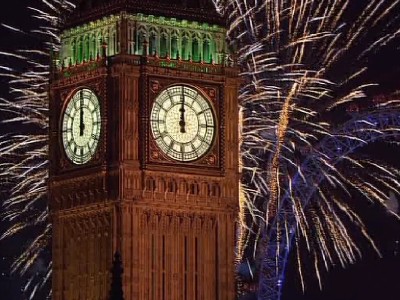
| Insert Generic New Year Screengrab here |
It’s time for my usual New Years Eve ritual of affecting cool and detached party ambivalence until the last possible moment. However, at the last minute, my resolve to stay home will collapse with a barrage of last minute texts as I try to in vain to search for that mythical perfect wild and decadent party.
You know the one - that soon-to-be historic event that everyone you know must have been invited, except for you?
You know the one - that soon-to-be historic event that everyone you know must have been invited, except for you?
Predictably, I’ll find myself yet again pleasantly drunk and toasted on a couch somewhere with a small gathering of friends, thinking proudly to myself that this was the best plan all along and wondering why I even bothered to entertain the idea of the overpriced punishment of clubs or re-enacting Braveheart in the desperate crush of Trafalgar Square.
Until next year, at least.
Either way, we want to be close to our loved ones during the Midwinter holidays and the celebration of the passing of the old year is something hardwired into us regardless of culture. Inevitably, that celebration turns to reflection on the year passed and the year ahead. It’s a curious time, when nostalgia is at it’s most myopic as we squint to make sense as to whether we’ve made sense of the last 12 months.
A family down the road are originally from Brazil and are planning to celebrate New Year with the ‘Quema del Año Viejo’ – literally the Burning of the Old Year. They have been building Papier-mâché effigies of bad things that have happened in the departing year to be burned on News Years Eve night. If you had a recent car accident, for instance, you may choose to make an effigy of the offending vehicle to purge that memory. The youngest son of this particular family has been building a dinosaur, which makes me think my own problems must have been pretty modest in comparison.
In a way, a broader manifestation of our desire to congregate and burn away of the Old Year is in the annual lists, reviews and ‘Best of’ commentaries that dominate the digital, print and whatever other airwaves there are left. In this reflective spirit I thought I would share my own ‘List of Stuff of the Year, 2011’. I don’t consider myself to be a particular expert in any specific branch of ‘stuff’, so instead I’ll cover all the traditional bases of music and movies and hide my limited view under the pretence of a ‘pick of the year’.
2011 has been a year of unrest and austerity, defined by a mood of impending great changes and uncertainty. At times like this the comforts of nostalgia are even more compelling. Whether it’s coincidence – or clunky editorial convenience – almost all of my scattered highlights of the last year reflect this.
 | ||||
| Refn's Drive, Blizten Trapper's American Goldwing and Amanda Fucking Palmer all delivered style and substance in 2011 |
Drive channels the same bleak 80’s neon dreams that I’m sure still trouble Michael Mann on a regular basis. Ryan Gosling’s Driver-with-no-name is an everyman nephew of Clint Eastwood and Travis Bickle. A vision of icy retro cool, punctuated with blasts of intense and brutal violence, Refn delivers pure cinema and a timely reminder of the importance to show and not tell.
Black Swan, conversely, reanimates the 70’s Giallo with a wild melodrama just barely contained by beautiful psychedelic visuals. Amidst the mayhem, Natalie Portman takes the role seriously enough to keep the viewer emotionally engaged and the climax packs a harder punch than any ballet-based drama has a right to.
An honourable mention should also go to Duncan Jones' Source Code, which was a fresh, economical and exciting spin on some classic pulp science fiction. I also enjoyed Jason Eisener’s wild exploitation movie Hobo With a Shotgun. Although an entirely more sleazy feature – and therefore heaps more fun – it manages a similar trick to those above. It is a grindhouse tribute, borne from a fake trailer for Tarantino & Rodriguez’s Grindhouse movie, but never descends into self-conscious parody or pastiche. Instead, it feels like the real deal, which is because it actually is. Even the Raccoons cartoon end theme blasted over the credits feels like it was always destined to close a splatter movie about a vengeful vagrant. It’s bloody, antisocial, subversive and – most bizarrely of all – occasionally quite charming.
Similarly, I’ve found myself travelling back to more comfortable and secure times through most of the year in music. I’ve been rediscovering and reloving the rare groove, funk and daisy age hip hop I grew up with and making virtual mixtapes from the whimsical folk rock of Fairport Convention and CSN&Y that soundtracked a time when I actually believed anything was possible.
This is why it’s fitting that my favourite long player release of 2011 was probably Blitzen Trapper’s American Goldwing. It’s a healthy slice of retro country rock on first listen that reveals many sublime pleasures on subsequent play. It also has some a couple of economical guitar solos and a heap of catchy singalong choruses, two endangered musical species that I’d never realised how much I’d missed. It is perhaps Blitzen Trapper’s least schizophrenic recording and sounds simultaneously new and fresh yet, at the same time, like an old friend who had always occupied that space somewhere between the Eagles and Joe Walsh on my record shelf.
Speaking of old friends, the last year also brought Bad As Me, a new release from Tom Waits. This is always a cause for celebration and it’s always a comfort to know that no matter how things may change over the years, ol’ Tom is still out there howling at the moon for all of us.
Aside from those two albums, I haven’t heard many new releases that have excited me. It’s a contrast to the rich pickings of the year before that brought us fresh sounds from The Dirty Projectors and The Animal Collective, amongst others.
Maybe all this nostalgia isn’t just a case of me starting old and jaded. Maybe there’s a wider sense of looking for escapism, or perhaps inspiration for where we can go from here.
In fact, amidst the chaos of the financial crash and a glimpse of the beginning of the collapse of complacent ideologies we’ve carried for so long that we almost seem to have forgotten they are ideologies in the first place, there are some positive signs. Foremost is in the power of collectivity, from the Arab Spring to the hopeful audacity of the Occupy movement.
In 2011, I discovered that Twitter might actually be a force for good and have some positive practical social effect – although our current Government appear to think quite the opposite and seem rather scared of any unsanctioned collectivity. It was sad footnote that we lost Apple idealist Steve Jobs in October, as perhaps as much as anyone, his legacy was to bring the world just a little closer together. Bill Gates, please note: the fact that Microsoft spellcheck doesn't even seem to recognise the word 'collectivity' just made me a little more suspicious of you.
In 2011, I discovered that Twitter might actually be a force for good and have some positive practical social effect – although our current Government appear to think quite the opposite and seem rather scared of any unsanctioned collectivity. It was sad footnote that we lost Apple idealist Steve Jobs in October, as perhaps as much as anyone, his legacy was to bring the world just a little closer together. Bill Gates, please note: the fact that Microsoft spellcheck doesn't even seem to recognise the word 'collectivity' just made me a little more suspicious of you.
It might be crass to suggest that this enduring spirit of collectivity was reflected in an unexpectedly strong year for live music, but the carnivalesque is an important factor in community empowerment. Any positive or peaceful thing that brings people together at a time when society seems to be fracturing has to be celebrated.
The Low Anthem delivered exquisite low anthems at The Green Man festival, Amanda Palmer began with heartbreaking keys and ended with a rocking punch into the air at Heaven in September whilst the legendary Roy Harper's 70th birthday concert at The Royal Festival Hall was intense, cathartic and transcendent. Those fearless feral freaks, The Artful Badgers, also proved there was clubland life beyond Dubstep – although I sometimes wear a tail and carry their boxes, so should maybe declare an interest.
In the arts there have been a few standouts too. The Fine Arts, at their best, should reflect our wider situation and it’s very clear that there have are big changes on the cultural horizon. For me, it was actually a retrospective of work from the last 40 years or so, the Susan Hiller exhibition at Tate Britain, that most captured the spirit of the times with its demonstration that interesting and challenging ideas could be engaging and entertaining without resorting to excessive showy glamour.
She weaves stories using pseudo-scientific discourse, recording the sublime, the strange, the arcane and the damned. Her canon is almost not art at all, but a sketchbook, patchwork museum of neglected ideas and stories. I could have spent hours alone in the single room that comprised Witness, a dark space dominated by a forest of disembowelled audio speakers trailing from bare wires from the ceiling. Each speaker broadcasts a eyewitness interview of an experience with an Unidentified Flying Object. You can concentrate on one speaker and enjoy a moment of full confessional or sit back and lose yourself in the murmured communion of the whole.
The effects of austerity on the arts is something that has shaken the commercial spectacle of the art world and seems on the brink of liberating the artist from the restrictions of economy and marketing. It’s no coincidence we’ve seen a rising profile from ‘Street Artists’ and it’s natural that this DIY ethic is now reaching to embrace the wider conceptual and formal arts. I don’t envisage too many million dollar crystal skulls over the next decade.
Across town in “London’s fashionable” Fitzrovia is Diemar/Noble Photography. Whilst I again have to declare an interest, as it’s a space I’m peripherally involved with, it has consistently exhibited a programme of challenging new photography alongside the provenance of classic and vintage shows.
Photography is finally being accepted, somewhat grudgingly, into the fine art club of this country and it’s about time. The immediacy of the medium has always troubled our arts establishment, despite our history as pioneers. With recent changes in technology, photography is now probably the most accessible of media to practitioners, collectors and enthusiasts. It is at the root of our new media and it’s universality and versatility ensure it’s relevance in the digital age. Most importantly, it allows diverse voices a platform and the entire contemporary programme at Diemar/Noble has surprised, entertained and proven to me unequivocally that there is some incredible talent in this city that has been criminally underrepresented. Emily Allchurch’s elegant photographic reimaginings of Hiroshiga's Tokyo – which gained an unexpected resonance as it was opened during the Japan earthquake – and Not The Chelsea Flower Show, a group and ‘alternative flower show’, remain my standout exhibitions of the year.
Finally, there wasn’t a lot of new writing that nudged my interest in 2010, although that was likely more related the fact it was a busy year and haven’t had the concentration. As a result, I made a reacquaintance with a small pile of short story anthologies. This inevitably led me back to the science fiction I read hungrily through college – hungrily not only because it was a genre I’ve always loved as a guilty pleasure but also as I didn’t eat very much at college.
 |
| The Parallel worlds of DC Comic's Batwoman and Murakami's IQ84 provided escapism as London burned. |
In a similar escapist and somewhat nostalgic vein, DC Comics decided to jump ahead of everyone else and choose this year to relaunch their entire universe in August. After picking up a few issues of the New 52, primarily out of curiosity, I have since found myself buying monthly issues for the first time since I was 15. Action Comics and Batwoman, in particular, have done much to sate at least part of my appetite for bite sized words and if you have any patchy history of interest in comics or costumed heroics, I’d recommend revisiting some of these titles – at least before before the next reboot. In a year when the altogether more banal real world villainy of crooked politicians, predatory bankers and octogenarian Antipodean media moguls have once again managed to slip from the clutches of appropriate justice, it's satisfying to visit a world where some form of fitting reparation is assured.
The only new release of an actual novel that I managed to snare was IQ84, the new epic tome by Japanese writer Haruki Murakami. I suppose this story of a woman who realises she has accidentally travelled into an alternate reality actually isn’t a taxi ride that far away from Science Fiction either, albeit filtered through the sublime and slightly magic-surrealist lens of Murakami world.
So, those were some recommendations plucked from my whirlwind 2011. With just a handful of gigs, movies and albums, alongside one book and a clutch of comics, it’s hardly exhaustive in terms of cultural commentary, or even particularly informative for that matter. Ultimately, it says more about my personal year than an authoritative judgement of the movies or books or whatnot of the year - just like every ‘Best of’ list or Review, really.
All of which, brings me back to the New Years Eve.
I guess if there’s been any kind of theme to the last year it’s been one of change. Change can be frightening if you resist it and fear it, but once you realise it’s a constant, it’s important to embrace it and take responsibility for making sure it’s leading somewhere positive and good. And so, while you’re all burning away the last year, be sure and take some time to pick through the ashes to gather up some of the best things from 2010 to bring with you into 2012.
I guess if there’s been any kind of theme to the last year it’s been one of change. Change can be frightening if you resist it and fear it, but once you realise it’s a constant, it’s important to embrace it and take responsibility for making sure it’s leading somewhere positive and good. And so, while you’re all burning away the last year, be sure and take some time to pick through the ashes to gather up some of the best things from 2010 to bring with you into 2012.
By the way, if any of you are having any wild, badass parties tonight, let me know…okay?


